Entrepreneurship covers the founder's side of the ledger: what ownership is worth, how founders pay themselves, which risks are personal rather than corporate, and when a business is worth continuing. Articles suit anyone weighing a jump from employment, plus operators who already made it and want the arithmetic checked.
A bootstrapped business needs a plan that earns its keep monthly — one page answering where revenue comes from, what breaks even, and what this quarter's bet is.
Founder vesting — typically four years with a one-year cliff — makes equity earned over time, protecting the founders who stay from the one who leaves in month seven.
A side project becomes a business when it clears three gates — real revenue, transferable operations, and a runway calculation that survives quitting — in that order.
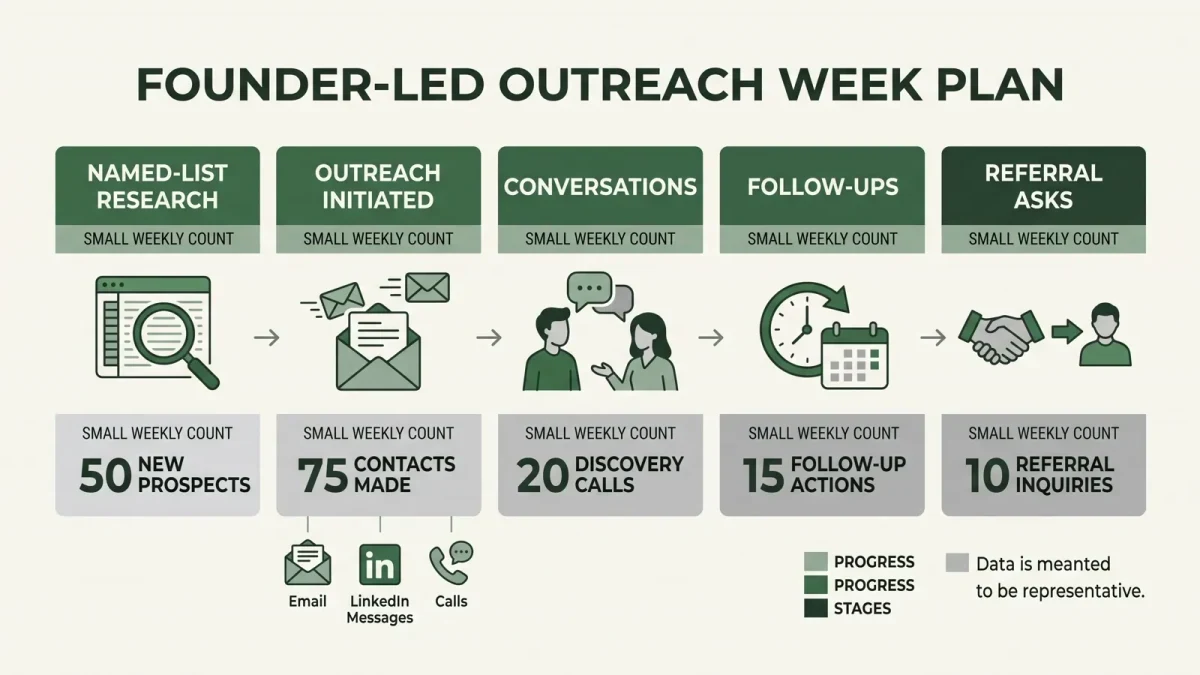
The first ten customers come from founder-led, manually-found conversations — named lists, communities you already belong to, and offers too specific to sound like marketing.